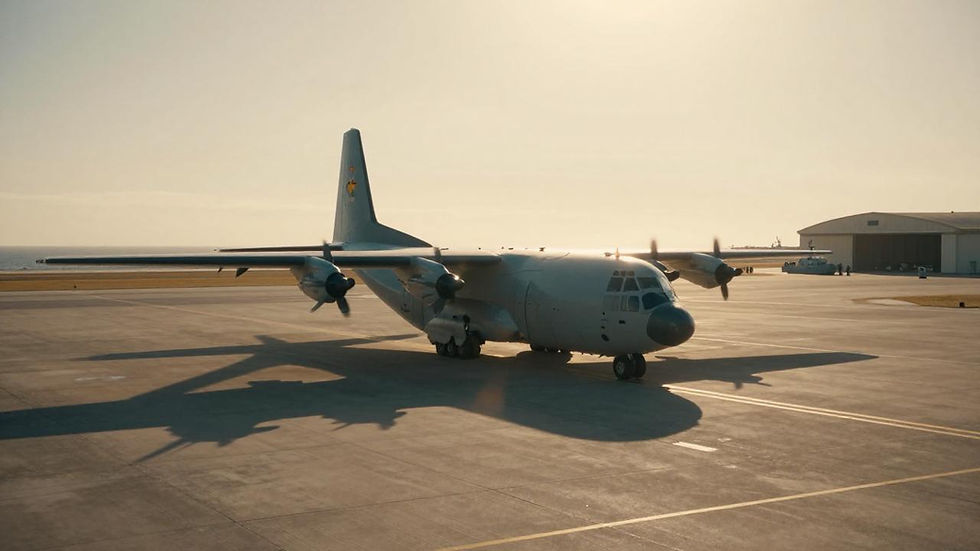
Khartoum Frames Sudan–Ethiopia Drone Strikes as Interstate Aggression


CES DAILY SIGNAL — October 29, 2026
On 28 October, in a Khartoum news conference attended by the defence, foreign affairs and information ministries alongside the General Intelligence Service, Sudan's army-led government laid out intercepted drone fragments, flight-path data and satellite imagery, and named the launch sites: inside Ethiopia, Bahir Dar airport among them (Radio Tamazuj, 28 October 2026). The dossier covered strikes on power stations and fuel facilities across several states, including a power station in El Manaqil, in Gezira state, and fuel storage sites with a pipeline linked to Bashayer Port, in Red Sea state (Sudan Tribune, 28 October 2026). Twenty-four hours earlier the same grid had gone dark for more than twelve hours after a strike on the Al-Markhiyat transformer station outside Omdurman, with an electricity company official estimating that as much as 60% of the capital's supply could be affected (Associated Press, 27 October 2026).
Khartoum has converted a blackout into a named interstate grievance, and will prosecute it diplomatically — because the army cannot afford a second front.
TRAJECTORY
No declaration of war follows from this. What follows is the slow conversion of the drone file into a standing diplomatic instrument. Khartoum keeps the dossier open, re-litigates it in every forum that will seat it, and lets the accusation do the work of alignment rather than the work of retaliation. Addis Ababa answers through denial and counter-charge; it was not reachable for comment when the dossier was unveiled, and its May playbook — dismiss, accuse, wait — is the cheaper option. Neither capital withdraws forces from the shared frontier. The grid remains a target whoever fires, because the operating utility attributes the strikes to the RSF while the government attributes them to a neighbour, and both readings are politically useful, and only one needs to be true. The decisive variable over the next quarter is not Ethiopian intent but Ethiopian capacity: an army committed in the north rarely opens a second front deliberately.
SECOND-ORDER EFFECTS
Eritrea collects the dividend. A Sudanese grievance against Addis Ababa hardens the Asmara–Khartoum–Cairo line (see our Ethiopia 2026 Geopolitical Risk Assessment) and raises Asmara's price for restraint, since the port of Assab becomes harder for Ethiopia to reach by negotiation. The cost is exposure: Sudan's eastern flank now rests on a partner whose own quarrel with Addis Ababa is precisely why the corridor matters.
Abu Dhabi's deniability gets more expensive. The complaint re-anchors Gulf logistics to a named interstate aggression rather than to a proxy war — a harder thing to deny in front of underwriters. There is a realistic possibility that Emirati supply routes shift further onto maritime corridors that are themselves under scrutiny.
Juba inherits the exit problem. Striking fuel storage and pipeline facilities tied to Bashayer Port puts export infrastructure on the Red Sea littoral inside the target set, and South Sudan's oil — landlocked, shipped through that same littoral — has no alternative route. It is likely that Juba accelerates contingency planning for its own crude outflows within the quarter.
ANALYSIS
The Dossier Says Less Than the Timing Says
The evidentiary package behind the Sudan–Ethiopia drone strikes is conventional: fragments, flight paths, imagery, a named airfield. The sequencing is what matters. On 26 October the state utility attributed five substation strikes — Sinja, Al-Hawata, Al-Fao, Mashkour and Al-Junaid — to the RSF, saying the damage had cut the entire southeastern grid (Sudan Electricity Holding Company, 26 October 2026). On 27 October an electricity company official attributed the Al-Markhiyat strike to the RSF (Associated Press, 27 October 2026). On 28 October the government attributed the pattern to Ethiopia, describing the Markhiyat hit as the seventh attack on power infrastructure in a week (Sudan Tribune, 28 October 2026) (see our Sudan 2026 Geopolitical Risk Assessment). One grid, three attributions in seventy-two hours, two of them domestic. The utility's own statement acknowledged "serious damage and technical faults" without naming a cause. The operational readout is unambiguous for anyone planning continuity in the capital: hospitals and bakeries shifted to generators, water pumping stations were identified as the most exposed dependency, and rationing was extended with no end date (Associated Press, 27 October 2026). It is highly likely that Khartoum sustains and re-cites the dossier — this is the cheapest instrument the government owns.
Why the Threshold Is Procedural, Not Military
The precedent is six months old. In May, Sudan recalled its ambassador from Addis Ababa, accused Ethiopia and the UAE of orchestrating drone attacks on Khartoum's airport, and its army claimed evidence of four launches from Bahir Dar since early March (Al Jazeera, 5 May 2026). Ethiopia called the charges baseless, and Reuters stated plainly that it could not verify comparable flight-path material (Reuters, 6 May 2026); it had already reported that Ethiopia hosted a camp training RSF fighters and had upgraded Asosa airport for drone operations (Reuters, 4 May 2026). By October the traffic ran the other way, with Addis Ababa accusing Khartoum of backing its armed opposition and receiving the same rebuttal in reverse (Mada Masr, 2 October 2026). Two capitals, the same accusation exchanged twice in six months. What is new is the target class: civilian energy infrastructure in the republic's agricultural heartland, where nearly 19.5 million Sudanese were already in severe food insecurity in the first half of 2026 (IPC, via EUAA, 2 October 2026) and where stalled grid repairs have put successive planting seasons at risk (EUAA, 2 October 2026). It is highly unlikely that Addis Ababa acknowledges the strikes. The pattern — recall, dossier, counter-charge, stalemate — makes a further formal downgrade of relations within ninety days likely.
An Accusation Priced by the Red Sea Axis
Khartoum's case was unveiled into a ready-made coalition. On 4 October, Egypt, Sudan, Eritrea and Somalia jointly declared Red Sea security the business of its coastal states (Eritrea Ministry of Information, 4 October 2026) (see our Egypt 2026 Geopolitical Risk Assessment). Days earlier, explosions had been reported in Addis Ababa, drone flights over the capital were banned, and Ethiopia severed its remaining diplomatic presence in Asmara (Reuters, 1 October 2026). The Security Council met in closed consultations on the Horn on 13 October (Security Council Report, 12 October 2026), while Sudanese fighter jets were reported stationed in Eritrea (Critical Threats Project, 15 October 2026). The accusation thus costs Khartoum almost nothing and taxes a neighbour already fighting on two fronts. It lands on a population paying the freight: 34 million people need assistance (UN figures, cited by Associated Press, 27 October 2026), and the UN human rights office counted 306 people killed by drone strikes in the first three weeks of October alone (cited 26 October 2026). There is a realistic possibility of a reciprocal expulsion or a border incident within ninety days; it remains unlikely that either capital authorises sustained cross-border kinetic operations.
SIGNALS TO WATCH
The next attribution is the tell: if the electricity holding company names launch sites in Ethiopia rather than the RSF for a further grid strike before end-November, the dossier has become doctrine.
Escalation becomes probable if Sudan expels Ethiopia's chargé d'affaires or formally downgrades representation before mid-December; the May recall is the template.
This reading holds unless Ethiopian federal units begin redeploying south and west from Tigray — a drawdown would signal Addis is buying quiet on its western flank rather than opening it.
Watch the Quintet on Sudan's next venue: a shift out of Addis Ababa, or formal reference to the drone file by the UN envoy's Geneva track, would mean the mediators have accepted that the host capital is now a party to the complaint.
---
Want deeper analysis?
Confidential advisory programs scoped to your organization — continuous monitoring, dedicated analysis, board-level support. Engagements are annual.
---
DISCLAIMER — This analysis is provided for informational and strategic planning purposes only. It is not investment advice, financial advice, or legal advice, and it should not be treated as such. Probability assessments reflect the analyst's calibrated judgment based on available open-source intelligence as of the date of publication, and are subject to revision as new information emerges. Some quantitative estimates and reported events are based on regional sourcing that may evolve as additional confirmation becomes available.