Mexico 2026: The Dependency Trap

Updated: Oct 9

Originally published August 6, 2026 · Updated: October 9, 2026
Contents
Key Takeaways
The cartel succession has consolidated rather than fractured. The February 2026 killing of CJNG founder Nemesio Oseguera Cervantes ("El Mencho") did not produce the succession war many anticipated. His stepson, Juan Carlos Valencia González ("El Pelón"), has emerged as the presumed leader of a narrower, harder organisation. It is highly likely that internal CJNG cohesion holds through 2027; a realistic possibility remains that factional warfare reignites in Jalisco and spills into the Bajío industrial corridor.
The security dividend is real but geographically hollow. Homicides have fallen by nearly half since late 2024, and the World Cup concluded without a major incident in host cities. But the Sinaloa war enters its third year with roughly 3,800 killed and 4,400 abducted, fourteen mayors assassinated since October 2024, and criminal pressure displaced toward peripheral territories — it is likely that measured improvement in showcase cities continues while contested regions deteriorate.
The trade architecture has been bilaterised. The July 1, 2026 US refusal to extend the USMCA converted a 16-year anchor into annual reviews running through 2036, while Canada's track has been frozen. Mexico is now the only party in formal review negotiations with Washington. It is highly likely that a standalone bilateral framework emerges by mid-2027 — in exchange for tightened rules of origin and energy and minerals concessions.
Sovereign risk has migrated from outlook to rating. Moody's cut the sovereign to Baa3 in May 2026 — one notch above speculative grade — citing Pemex support, rigid spending and deficits near 5% of GDP. The second judicial elections, scheduled for 2027, extend institutional uncertainty into the next planning cycle.
The nearshoring ceiling is physical. Record FDI of roughly $41 billion through the third quarter of 2025 is colliding with a water-energy-infrastructure constraint in exactly the northern states receiving the investment. It is highly likely that this ceiling binds in the 2027–2029 horizon, before demand does.
The China vector is defensive, not autonomous. A $60 billion trade deficit, a shuttered Chinese-linked lithium project in Sonora now in international arbitration, and a February 2026 critical-minerals action plan aligned with Washington: the republic is being pulled, not hedging — even as its public views China more favourably than the United States for the first time in two decades.
Fiscal arithmetic is compressing. Support to Pemex runs $35 billion (2025), $14 billion (2026) and $4.8 billion (draft 2027 budget) on a trajectory toward claimed self-sufficiency that creditors do not fully endorse, with public debt heading toward roughly 55% of GDP by 2028.
Portfolio-level. The investable distinction through 2028 is between events that confirm the managed-dependency baseline — annual review rounds, tariff litigation, calibrated security cooperation — and events that break it: a US military operation against cartel targets, a punitive review outcome, a Pemex credit event, or a reignited CJNG war. The first category is absorbable and largely priced; the second reprices sovereign paper, the peso, northern industrial assets and cross-border logistics in a single cycle. It is highly likely that institutions which have not pre-sorted which side of that line each Mexican exposure sits on will learn the difference from the market rather than from their planners.
1. The Cartel Decapitation Paradox: El Mencho, Fragmentation, and the Sinaloa War
El Mencho's killing on February 22, 2026 was, operationally, a triumph. Mexican special forces, acting with US intelligence support, eliminated the founder of the Western Hemisphere's most aggressive criminal organisation — a group the DEA assesses as matching the Sinaloa Cartel in reach, with presence in all fifty US states (DEA, 2025). The Justice Department had designated the CJNG a Foreign Terrorist Organization in February 2025, reframing a criminal-justice challenge as a counterterrorism priority and expanding the instruments available to US agencies operating in or near Mexican territory (DOJ, February 2025).
The strategic effect, however, conformed to a pattern documented across this portfolio — most recently in our Colombia 2026 assessment: leadership removal produces disaggregation, not disarmament. What distinguishes the Mexican case from the Colombian precedent is the velocity of consolidation. Within months, intelligence converged on El Mencho's 41-year-old stepson, Juan Carlos Valencia González ("El Pelón"), as the presumed successor controlling the organisation (El País, 16 September 2026). Rather than four commanders warring for supremacy, the succession has narrowed to one dynasty holding the centre — a tighter, harder CJNG, now the target of a $25 million State Department reward announced as part of a package exceeding $100 million in bounties on cartel leadership (US State Department, 5 August 2026).
The consolidation reading matters commercially, and it comes with caveats. The organisation's coherence rests on a single untested heir; the immediate aftermath of the February raid — narco-blockades, arson in grocery stores, civic paralysis across Jalisco — was characterised by security analyst David Saucedo as "narco-terrorism" designed to "paralyse economic activity and impose a national and international image cost on the government" (CNN, February 2026). There is a realistic possibility that enforcement pressure or an internal purge reignites that violence at scale: the pattern from Iraq and Colombia is that consolidation under an heir is fragile precisely where the founder's charisma, not institutional procedure, held the machine together.
The Sinaloa Cartel's internal fracture operates on a separate but interacting timeline, and it has not consolidated. The September 2024 abduction of Ismael "El Mayo" Zambada by a son of "El Chapo" Guzmán split the organisation into warring factions — "los Chapitos" versus the Zambada loyalists — transforming Culiacán and its hinterland into a zone of sustained gun battles, road blockades and arson. Two years in, the ledger is stark: an estimated 3,800 killed and 4,400 abducted in Sinaloa state alone (FT, 20 September 2026). Late September brought a grim marker of the war's second anniversary — twenty bodies, some decapitated, discovered across the municipality and thousands marching in white through Culiacán demanding an end to the violence (ACLED, 17 September 2026; AP, 14 September 2026). The US Treasury escalated in parallel, sanctioning the leadership and financial networks of the Mayo "La Mayiza" faction on September 29 (US Treasury, 29 September 2026). The federal indictment of Sinaloa governor Rubén Rocha Moya, unveiled April 30, 2026, confirmed the institutional penetration residents had long described (Politico, 30 April 2026). "It is very difficult for President Claudia Sheinbaum to convince leaders of her Morena party that political allies must be prosecuted," Saucedo observed at the time — "even if it is clear they are bought off by the drug cartels" (The Christian Science Monitor, 1 May 2026). The subnational tally compounds the picture: fourteen mayors assassinated since the current administration took office in October 2024, three of them in 2026 (Uno TV, 22 July 2026).
The Trump administration's military posture compounds the variable. A White House directive reported in August 2025 instructed the Pentagon to develop plans targeting Latin American cartels designated as FTOs, and the president's rhetoric at the United Nations in September — calling Mexico "the epicenter of cartel violence" — signals a posture that has not softened with cooperative performance (AS/COA, 22 September 2026). This is the Monroe Doctrine framework analysed in our Colombia 2026 assessment: counternarcotics justification deployed for broader strategic objectives, creating latent risk for any regional government perceived as insufficiently cooperative.
For organisations with personnel, logistics or extractive-sector exposure to northern and western states: separate the organisational headlines from the operational geography.
Baseline: CJNG consolidated under a single heir with a $25 million US bounty attached; the Sinaloa war unresolved at ~3,800 killed and 4,400 abducted in two years; state-level political capture now indicted at gubernatorial level; showcase-city security maintained by concentration of ~100,000 forces during the World Cup window, with displaced violence in Guerrero, Michoacán and rural Sinaloa. Treat Culiacán, Tijuana's periphery and the Tierra Caliente as enhanced-risk zones through 2027; do not extrapolate Mexico City indicators to those theatres.
2. The Fentanyl Bargain: Extraditions, Seizures, and the Conditionality Trap
Security cooperation is the currency in which Mexico purchases its trade access, and the exchange rate is deteriorating even as the deliveries accelerate.
The deliveries are measurable. In February 2025, twenty-nine high-level criminal suspects were transferred to US custody; twenty-six more followed in August 2025; thirty-seven in January 2026, with Sheinbaum insisting the transfers were "a sovereign decision" of her government (AP, 21 January 2026). Fentanyl seizures surged, including a record 1.1 metric-ton bust in December 2024 (Baker Institute, 2025). Homicides have fallen by nearly half since late 2024 by the president's own July accounting, and border apprehensions have collapsed to historic lows — roughly 400 per day by July 2026, levels not seen in over three decades (Uno TV, 22 July 2026; LA Times, 9 September 2026). Migrant shelters in Ciudad Juárez stand empty (Reuters, 8 September 2026).
The reciprocation has not followed. The administration's judicial architecture continues to build cases irrespective of Mexican cooperation levels — the August 2026 charges against five senior CJNG figures and the $25 million reward being the clearest demonstration (DOJ, 5 August 2026). Sheinbaum's claim that fentanyl trafficking has fallen roughly 50% since she took office exceeds what independent CBP seizure data support — a discrepancy of method that Washington's conditionality machinery will exploit. The Congressional appropriations report for FY 2027 expressed "deep concern" about continuing violence and demanded a ninety-day report on Mexican law-enforcement readiness (US Congress, H.Rept. 119-631). And the operating environment carries a second bilateral front: following reports that the CIA had expanded surveillance flights over cartel hotspots, Mexican authorities exposed a Chihuahua-state drug-lab action allegedly coordinated with the US without notification of the federal security cabinet — an episode read by Brookings' Vanda Felbab-Brown as Sheinbaum "drawing a red line" against a slippery slope toward unilateral American action (Politico, 30 April 2026).
There is an inherent asymmetry worth naming plainly: almost certain is continued compliance pressure — extraditions, seizures, troop deployments — because the trade file gives Washington quarterly leverage instruments it did not possess under the multilateral framework. It is likewise highly likely that conditionality tightens rather than loosens even if cooperation improves, because the FY 2027 appropriations language treats performance as a floor, not a ceiling. This dynamic — cooperation purchasing time, not exemption — is the exact mechanism documented in our Colombia 2026 and Venezuela state-collapse analyses.
For organisations with cross-border operations or workforce exposure: model conditionality as a permanent feature, not a negotiation phase. Baseline: extraditions trending 26–37 per tranche with intervals of six months or less; homicide statistics down ~40–50% from late-2024 baselines but concentrated in showcase metros; border crossings at ~400/day and falling; judicial exposure to Mexican officials extending to sitting governors. Embed the US congressional calendar — appropriation cycles, decertification windows — into country-risk reviews; every assistance instrument is now a trade-file variable.
3. The USMCA Gambit: Bilateral Extraction and the Sunset Clause
On July 1, 2026, the United States announced it would not agree to extend the USMCA in its current form. The decision did not terminate the agreement — it triggered an annual review cycle running through 2036, during which the treaty remains operative but subject to continuous renegotiation pressure.
The structural consequence is severe and quantifiable. Approximately 82% of Mexican exports went to the United States in 2025, within an $871.6 billion two-way trade relationship — the hemisphere's largest single-country corridor, moving more than $2.2 billion per day, with US imports from Mexico at $534.3 billion in 2025 against $343.7 billion in 2018 (US Census Bureau, 2025). Under the trilateral architecture, disputes distributed pressure across three parties; the review framework, combined with Canada's track being frozen since August 22, leaves one player at the table with the other chair empty (CSIS, 2026). As Economy Secretary Marcelo Ebrard framed it after meeting US Trade Representative Jamieson Greer at the G20 ministerial in Milwaukee: Mexico is now "the country that exports the most and pays the least" among US trading partners — a status he presents as negotiating leverage, and Washington prices as an opening position (El País, 3 October 2026).
The tariff overlay compounds the review pressure. The Supreme Court struck down the IEEPA-based tariffs in February 2026; the administration pivoted within days to Section 122 of the Trade Act of 1974, imposing a 10% surcharge on most imports that expired July 24 (USA Today, 20 February 2026; CBS News, 23 February 2026). The gap has been filled unevenly — sectoral tariffs on steel, aluminium and vehicles under Section 232 remain the operative constraint on Mexican exporters, and they are Ebrard's first-order target in the talks. The negotiation calendar has developed its own rhythm: three formal rounds since July; a fourth round in Washington, initially set for late September, postponed — officially owing to the Xi Jinping state visit — with technical discussions continuing (Politico; El País, October 2026; ICPA USMCA Review Tracker, 2 October 2026). At Milwaukee, the two sides co-signed with Argentina a joint statement on eliminating forced labour from supply chains — a laboratory clause that previews the labour provisions likely to anchor the final deal (USTR, 2 October 2026). For the automotive sector specifically, the geometry of exposure concentrates in the Bajío corridor — Guanajuato, Querétaro, Aguascalientes — the same industrial spine that the CJNG-fragmentation pathways in section 9 identify as the expansion geography of criminal violence under Scenario B: supply-chain planners and corporate-security planners are, for once, watching the same map.
Sheinbaum's response has been calibrated. The deployment of approximately 10,000 troops to the border — framed as a security measure rather than a trade concession — addressed the migration and fentanyl pressure points explicitly linked to trade access, while Trump's public characterisation of the bilateral relationship as "good" on trafficking softens the rhetorical field without altering the asymmetry (AP, 16 January 2026). The peso traded near 17.15 in mid-September and slipped toward 18 in early October — a range consistent with negotiation-driven volatility rather than distress (Bloomberg, 17 September 2026; Mexico News Daily, 3 October 2026). Remittances of $30.76 billion in the first half of 2026 remain the stabilising undercurrent.
It is highly likely that a bilateral framework — freestanding or as a USMCA annex excluding Canada — is concluded by mid-2027. The probability rests on converging incentives: Washington wants a deliverable before the 2027 legislative cycle hardens, per the electoral rhythm mapped in our US Midterms 2026 assessment; Plan México requires tariff predictability to convert FDI announcements into steel. But a deal being likely does not make it cheap: rules-of-origin tightening and energy-sector compliance demands are the near-certain price, and both intersect with the constitutional constraints documented in sections 4 and 5.
For organisations with North American supply chain exposure: rebuild the planning horizon around annual reviews, not treaty sunsets. Baseline: ~82% export dependence; Section 232 sectoral tariffs persisting through any interim deal; four-plus negotiation rounds per year with the fourth round slipping past October; $30.76 billion H1 2026 remittance cushion; peso band 17–18.5 under negotiation noise. Contract 2027 capacity on the assumption of tightened rules of origin — the US–Argentina–Mexico forced-labour statement is the template for verification regimes that will raise compliance cost by design.
4. The Judicial Overhang: Elected Judges, Sovereign Risk, and Investment Erosion
The judicial reform was sold as democratisation. Its operating function is jurisdiction control.
Enacted in September 2024 and implemented through the first judicial elections on June 1, 2025, the constitutional amendment replaced appointment with popular election for the entire federal bench — all judges, all nine Supreme Court justices, terms of twelve years renewable at nine. The Federal Judiciary Council was eliminated; a popularly elected Judicial Discipline Tribunal gained the power to sanction and remove judges. Roughly 2,700 judges were seated from over 7,000 candidates in the first round; a second round covering the remaining ~4,000 positions falls in 2027 — squarely inside the planning horizon of every foreign investor in the republic (CSIS, 2025; Human Rights Watch, 2025).
Human Rights Watch's assessment is unambiguous: the reform is "likely to make it more loyal to the government," giving political actors "far more power to sanction or even remove judges who were seen as going against the 'popular will'" (HRW, 2025). The investment-relevant transmission channels are three: commercial dispute outcomes subject to electoral pressure; prolonged compositional uncertainty through the 2027 second round; and the loss of the institutional buffer that previously insulated administrative judicial decisions from political interference (CSIS, 2025). FTI Consulting flags enforcement of arbitral awards, IP protection, and regulatory challenges to energy and infrastructure concessions as the exposed categories; the Baker Institute adds "non-trivial risk" to USMCA dispute-settlement panels whose legitimacy is now electorally contestable (Baker Institute, 2025).
The market verdict arrived before the ink dried on the coalition's management strategy. Moody's — which had shifted the outlook to negative in November 2024 citing weakened checks and balances — downgraded the sovereign to Baa3 from Baa2 on May 20, 2026, one notch above speculative grade, citing rigid spending, a narrow revenue base and continued support for Pemex (Reuters, 20 May 2026). The financial transmission has been swift: the peso weakened past 18 as the downgrade interacted with domestic turbulence, and the central bank on June 29 introduced a bond-buying facility — an institutional first for Banxico — explicitly to backstop money-market liquidity in the downgrade's wake (Investing.com, 29 June 2026; Mexico News Daily, 3 October 2026).
The 2027 second round is the pressure point with the widest distribution of outcomes. Almost certain is continued Morena dominance of the elected bench — the coalition's electoral machinery proved decisive in round one. Beyond that, a realistic possibility exists that a constitutional crisis crystallises: a disciplined, politically aligned judiciary upholding executive actions that collide with treaty obligations or investment protections, converting a domestic governance question into an arbitration and sanctions vector — the mechanism by which the judiciary becomes the trigger wire for Scenario C in section 9.
For organisations with contract-enforcement, IP or concession exposure: price jurisdiction risk into Mexican legal structures now, not after the 2027 round. Baseline: full federal bench elected by end-2027; discipline tribunal under effective governing-coalition control; Baa3/stable sovereign with debt-to-GDP rising toward ~55% by 2028; Banxico rate policy at 6.5% with an easing bias constrained by fiscal risk premia. Move dispute-resolution clauses to third-party venues where enforceable; stress-test concession contracts against arbitration-enforcement slippage of 12–24 months.
5. The Nearshoring Bottleneck: Water, Energy, and the Infrastructure Ceiling
The nearshoring narrative contains a structural assumption that the physical data do not support: that the destination region can host the investment.
Start with what is real. Foreign direct investment reached a record of roughly $41 billion through the first three quarters of 2025, a 15% year-on-year increase, with manufacturing absorbing about 37% of the total — figures announced by the Secretariat of Economy itself (Secretaría de Economía, October 2025). Cumulative FDI is up an estimated 69% since 2018. The peso appreciated approximately 22% in 2025 on nearshoring-driven inflows. Analysts attribute up to 0.7 percentage points of annual GDP growth to the trend.
Then count the water. The six northern border states — Baja California, Sonora, Chihuahua, Coahuila, Nuevo León, Tamaulipas — are simultaneously the primary investment destinations and the most water-stressed territories in the federation. Per the National Water Commission, over 45% of the region's aquifers are overexploited, with rainfall averages among the lowest nationally and infrastructure ageing across the distribution network (World Economic Forum, 2026). The macro-frame is darkening rather than brightening: the UN University's water institute warned in January 2026 that the planet is entering an age of "global water bankruptcy," with roughly 70% of major aquifers in long-term decline (UNU-INWEH, January 2026). Agriculture consumes approximately 80% of regional water, making industrial expansion a zero-sum claim on a shrinking account — and the 1944 treaty now intersects directly with the trade file: Senator John Cornyn has formally asked USTR Greer to enforce Rio Grande deliveries through the USMCA review, receiving the reply that Mexico would "need to be playing ball" on water to preserve beneficial trading terms (TPR, 22 February 2026). Water has become a tariff variable — a linkage with no recent precedent in North American commercial relations, and one whose climatic drivers we map in our El Niño 2026 analysis.

The energy-water nexus compounds the constraint on the same geography. Generation capacity sits in the south; nearshoring-driven industrial demand concentrates in the north — the transmission spine connecting them is a known single point of failure, mirroring the north-south grid inversion documented in our Taiwan 2026 assessment. The October 2024 constitutional reform reclassified Pemex and CFE as state enterprises with constitutional "prevalence," preserving the 54/46 public-private electricity mandate — a structure that caps private generation at precisely the margin the industrial build-out requires. The state utility's own investment plan, $23.4 billion through 2030, was sized for a slower demand curve than the nearshoring scenario implies (WSJ, 2025). Sheinbaum's reported openness to pilot fracking in Coahuila and Tamaulipas is a pragmatic departure from resource nationalism — but the timeline runs in years against a demand curve measured in quarters.
The World Economic Forum's framing survives every update: the constraint is not demand but a supply-side ceiling imposed by the water-energy-infrastructure nexus within the 2027–2029 horizon (World Economic Forum, 2026). It is highly likely that binding water constraints in the northern clusters emerge as the marginal factor on FDI conversion rates within that window — conventional country-risk models will not capture it, because the constraint is physical, not fiscal or regulatory.
For organisations with manufacturing siting or expansion decisions in the north: underwrite water and grid as primary due-diligence categories, ahead of labour cost. Baseline: 45%+ of regional aquifers overexploited; agriculture claiming ~80% of supply; private generation capped by the 54/46 constitutional mandate; CFE investment plan of $23.4 billion through 2030; treaty water obligations now surfaced in tariff negotiations. Secure dedicated water rights and behind-the-meter generation in site selection for any facility with water-intensive processes through 2029.
6. The Fiscal Fault Line: Pemex, the Deficit, and the Sovereign Squeeze
Pemex is not a company with a fiscal problem. It is a fiscal problem with a company attached.
The trajectory is documented and dated. Net losses during 2019–2023 increased 168% over the 2013–2018 period; the company requires continuous capital injections to service a financial debt now running near $99 billion, alongside roughly $23 billion owed to providers (Baker Institute, 2025; Reuters, 2026). The state has transferred approximately $130 billion to the oil major over the bailout era — support of roughly $35 billion (1.9% of GDP) in 2025 alone, with $14 billion budgeted for 2026 (Bloomberg, 25 August 2026; Moody's, 20 May 2026).
The finance ministry's own answer is a staged exit. The government issued $13.8 billion in sovereign debt to fund a $12 billion Pemex bond buyback — the machinery of deleveraging by public balance sheet (WSJ, 2026). A ten-year plan presented in September targets financial self-sufficiency by 2027: Pemex "will no longer need the finance ministry's support" in the president's words, with financial debt guided down to $88.8 billion this year and $77.3 billion by 2030 (Reuters, 2026). And the draft 2027 budget slashes direct support by nearly 70% to 81 billion pesos — $4.8 billion (Bloomberg, 9 September 2026).

Creditors have priced the plan at a discount. The bonds trade at speculative-grade levels against a $130 billion cumulative commitment despite the official rating — a gap between paper and pricing that itself signals market expectations — and the ratings arithmetic is unforgiving: Baa3 is one notch from speculative grade, and any slippage on the self-sufficiency path converts a fiscal nuisance into a formal credit event (Bloomberg, 25 August 2026). The deficit picture around it: near 5% of GDP in 2025 against a 4%-of-GDP fiscal rule repeatedly overridden since 2023; government gross debt at 49.3% of GDP and rising toward ~55% by 2028; growth forecasts cut below 1% for 2026 (Moody's, 20 May 2026).
Two readings compete. The benevolent one: the 2027 budget cut is the discipline milestone, and Banxico's bond-buying facility provides the monetary backstop that lets deleveraging proceed without a liquidity accident. The sceptical one: a 70% support cut announced in the same season as a $12 billion buyback is choreography, not rupture — the contingent liability has been re-labelled as sovereign debt rather than reduced, and Moody's stable outlook assumes "further weakening of fiscal capacity will be gradual." Our calibrated view sits between: highly likely that Pemex avoids an acute credit event through 2027 — the state has demonstrated the will and the market access to paper over maturities. A realistic possibility nonetheless persists that the arithmetic breaches containment in 2028–2029, when the combination of plateauing production, deferred maintenance and rising sovereign yields outruns the plan's assumptions.
For organisations with sovereign-paper, peso or energy-sector exposure: treat Pemex contingent liabilities as the dominant tail variable in Mexican macro risk. Baseline: $99 billion financial debt, $23 billion supplier debt; transfers running $35B/$14B/$4.8B across 2025–2027; self-sufficiency target 2027; government gross debt ~49.3% of GDP and climbing. Model sovereign spreads at +150–250 basis points under an election-adjacent or trade-shock scenario; stress-test peso positions against 21–22 per dollar under a delayed-deal-plus-Pemex-slippage combination.
7. The China Vector: Critical Minerals, Trade Deficits, and Strategic Autonomy
Mexico's positioning between Washington and Beijing follows the pattern our Brazil 2026 assessment termed the gravitational pull of Chinese commercial partnership when American access constricts — with one decisive variation: the republic is not hedging. It is being pulled.
The trade deficit with China reached approximately $60 billion in 2025, and the 2026 budget answers with tariff hikes on Chinese automobiles, textiles and plastics, plus anti-dumping investigations against bicycles and footwear — a defensive posture shaped as much by US pressure as by domestic industrial policy (WITA, 2025). The clearest signal is the Sonora lithium file. In August 2025, operations halted at the Sonora project — the Bacanora/Ganfeng consortium's clay-deposit development, among the largest undeveloped lithium resources outside South America's salares — amid the fallout from the 2022 mining-law reform reserving lithium to the state and the subsequent cancellation of nine concessions in 2023. Ganfeng filed ICSID arbitration in 2024 (ARB/24/21); partner Cadence Minerals registered its own claim in 2026 (ARB/26/36); the original article's attribution of the project to "Citic Guoan Group" was an error this update corrects (Reuters, 24 June 2024; Mexico Business News, 2026; ICSID filings).
The alignment follows. A February 2026 bilateral action plan coordinates policy on lithium, copper, graphite and other strategic materials with Washington — the critical-minerals theatre we map globally in our dedicated critical minerals assessment (CRS, 23 September 2026). The US critical-minerals list, updated November 2025, counts sixty minerals; the national endowment spans at least twelve of them — copper, silver, lithium, graphite, molybdenum, zinc, manganese, fluorspar, bismuth, antimony, barite, lead. Ebrard has framed mineral access as a national-security priority, with large-scale exploration resumption signalled for 2026 — a diversified profile distinct from Chile's copper concentration or Bolivia's lithium monoculture.
The strategic tension is structural, and the public sentiment sits athwart it. A Pew Research Center poll published in July 2026 found, for the first time in nearly two decades of tracking, that favourable views of China (35%) now exceed favourable views of the United States (20%) among the Mexican public — a swing driven by tariff fatigue and the transactional character of American engagement (Pew Research Center, July 2026). Sentiment, however, does not move the dependency dial: the nearshoring model, the security architecture, and the minerals alignment all require integration with the US market that absorbs 82% of exports. When Mexico joins a US-led minerals framework, it constrains access to Chinese processing capital; when it hosts Chinese-linked projects, as Sonora showed, ownership structures carry execution and sanctions risk. The ECLAC panel's advice that regional states "not choose sides" is sound in principle and operationally unavailable to a country whose export artery runs north.

It is likely that the minerals partnership deepens through 2027 — the February action plan and the renegotiation calendar reinforce each other, and Washington's appetite for non-Chinese lithium is structural. A realistic possibility remains of selective re-engagement with Chinese capital in downstream segments where American replacement capacity does not exist, structured through instruments designed to survive US screening.
For organisations in extractive industries and critical-minerals supply chains: treat ownership provenance as the gating variable on Mexican mineral projects. Baseline: $60 billion China trade deficit; two live ICSID claims over Sonora lithium; twelve-plus overlap with the US critical-minerals list; exploration resumption signalled for 2026–2027. Screen all prospective partners for OFAC exposure before commitment; sequence investments to follow the bilateral action plan rather than precede it.
8. The Sheinbaum Equation: Tactical Mastery Against Structural Drift
The Sheinbaum presidency is a study in the management of compression: an administration delivering measurable results inside an architecture that is drifting against it on every timeline that matters.
The tactical ledger is genuinely strong. Homicides down nearly half since late 2024. The World Cup executed without major incident across three host cities. Thirty-seven cartel figures transferred to US custody in a single January tranche, framed and defended as sovereignty in action. Approval ratings that dipped seven points through the Sinaloa and Chihuahua crises — and recovered. An international standing expressed in convening power: the G7 invitation at Kananaskis, the CELAC summit, and the standing to co-sign hemisphere-scale statements with Washington at Milwaukee (El País, 3 October 2026). Against the comparative set — Petro's confrontation in Colombia, the Maduro endgame in Venezuela — the calibration looks less like timidity than like the only viable equilibrium under the Monroe Doctrine pressures of the current US posture.
The structural ledger is moving the other way, and the sections above are its line items. Export concentration at 82%. A judiciary being converted to electoral majorities. Water and grid ceilings converging on the growth model's own geography. Pemex liabilities migrating onto the sovereign balance sheet by another name. And the security dividend hollowing at the periphery even as its metropolitan indicators improve. Her own coalition is showing the strain: the May 2026 amendment adjusting electoral-calendar provisions of the judicial reform was blocked by allies in parliament — revealing intra-Morena fault lines over implementation that the legislative passage concealed.
The equation, then: management competence running against structural time. It is likely that the administration sustains the calibration through the 2027 judicial second round and the USMCA endgame — the skill is real, and the incentive structure of both parties favours deals over ruptures. But every tactical success in this file purchases space in a game whose terms are set elsewhere: the compression can be managed indefinitely only in the sense that the manager, not the structure, determines the pace of concession. That asymmetry is the analytical hinge on which the scenarios below turn.
For boards and executive committees: assign the scenario set in section 9 a single accountable owner, and read this assessment alongside our US Midterms 2026 analysis — the electoral clock in Washington and the trade calendar in Mexico City are now the same clock at two speeds. Baseline: mid-term election November 2026 in the US compressing Washington's deal appetite; judicial second round in 2027; annual reviews through 2036; Pemex self-sufficiency checkpoint 2027. Sequence strategic decisions to the combination of those four dates, not to any single one — the essence of this Mexico 2026 geopolitical risk assessment.
9. Mexico 2026 Geopolitical Risk Assessment — Three Scenarios
The following scenarios map probable pathways through 2027–2028. Probability assessments reflect calibrated judgment based on available open-source intelligence as of October 9, 2026.
Scenario A — Managed Dependency and Incremental Stabilisation (Probability: ~50–55%)
The current trajectory persists and matures. The bilateral framework concludes by mid-2027 — a standalone agreement or USMCA annex excluding Canada — preserving most preferential access in exchange for tightened rules of origin, labour verification on the Milwaukee template, water-treaty compliance mechanisms, and minerals alignment. Section 232 tariffs on steel, aluminium and vehicles are reduced, not eliminated. The CJNG succession under Valencia González holds without major internal rupture; the Sinaloa war grinds on at declining intensity without spreading beyond its core geography. The 2027 judicial second round proceeds, extends Morena's bench dominance, and produces friction with arbitral institutions — but no acute constitutional crisis. Pemex meets its 2027 self-sufficiency checkpoint approximately and nominally; the sovereign stays at Baa3. Nearshoring investment continues at a moderated pace as water and grid constraints bind in the northern clusters through 2029. Baseline peso band 17–19.
Why it holds: converging incentives on both sides of the border — Washington's electoral calendar rewards a deliverable, Plan México requires tariff predictability, and the administration's demonstrated delivery on security purchases the political space for concessions. Why it is not higher: the scenario assumes the fourth round's slip was calendar, not substance; assumes no opportunistic escalation in the FTO-military file; and assumes Banxico's backstop absorbs fiscal noise. Each assumption is individually reasonable; jointly they leave room for Scenario B's entry conditions.
Scenario B — Trade Compression and Security Deterioration (Probability: ~25–30%)
Negotiation momentum stalls — water-treaty enforcement and rules of origin become the breaking points rather than bargaining chips, and Section 232 tariffs harden into permanence as leverage for a broader "economic security" framework. Nearshoring decelerates visibly: FDI conversion rates fall as uncertainty persists, and some manufacturers defer or relocate planned expansions to Vietnam and alternative destinations. The CJNG succession fractures under US enforcement pressure or an internal purge, extending violence from Jalisco into Michoacán, Guanajuato and the Bajío corridor. The Sinaloa war remains unresolved and metastasises into secondary urban centres. The fiscal trajectory deteriorates as Pemex's self-sufficiency plan slips and tariff-reduced trade receipts compress revenue; the sovereign loses its last investment-grade notch in 2027 or 2028. Migration pressure from Central America re-accelerates as regional growth falters.
Why not higher: the strongest B dynamics of the original assessment have partially unwound — the credit downgrade already occurred and was absorbed; migration flows are at generational lows; and each side has demonstrated a preference for deals over ruptures. Why not lower: the trigger set is live and cheap — a single punitive review cycle, a single water-enforcement provocation, a single CJNG rupture — and the political cost curves on both sides of the border in 2027–2028 make one of them firing more plausible than none.
Scenario C — Systemic Rupture and Monroe Doctrine Activation (Probability: ~15%)
One or more triggers fire. A unilateral US military operation against cartel targets on Mexican territory under FTO authorities produces a bilateral crisis analogous to the Venezuela extraction. Or a review cycle effectively terminates preferential access, collapsing the nearshoring model. Or a CJNG succession war overwhelms state capacity across multiple states simultaneously, producing mass displacement. Or a Morena-controlled judiciary upholds executive actions violating USMCA investment protections, triggering arbitration cascading into sanctions. Sheinbaum faces the structural dilemma Petro confronted: comply with demands that are domestically destabilising, or resist and absorb the punitive instruments — decertification, sanctions, tariff escalation — the Monroe framework makes available. The regional consequences exceed the Venezuela spillover by an order of magnitude: a Mexican security crisis would disrupt the integrated North American manufacturing backbone of US industrial output, generate migration pressure without modern precedent, and create a contested-border dynamic with direct US domestic political consequences.
Why not lower: the UN rhetoric has not softened, the Pentagon planning file remains open, and the FTO architecture exists precisely for this use. Why not higher: both principals have spent eighteen months demonstrating the contrary preference, the trade relationship's density raises everyone's costs, and each prior trigger window has closed without ignition.

10. Implications
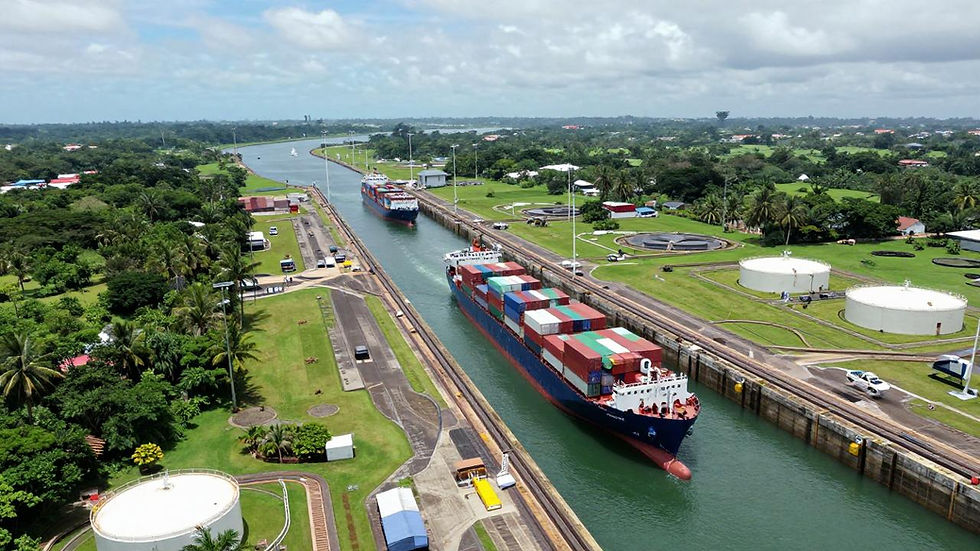
For organisations with North American supply chain, manufacturing or logistics exposure. Rebuild planning horizons around annual review cycles, not treaty sunsets. Model tariff volatility as a baseline condition: retain 10–15% landed-cost contingency on Mexico-routed goods through the review period. Stress-test dual-sourcing for any component with >60% Mexico concentration. Map the CPTPP and Canada-routing alternatives now, ahead of need — the chokepoint analysis in our Panama Canal 2026 assessment covers the western arc of the same contingency.
For financial institutions and asset managers. Stress-test sovereign exposure against a 2027–2028 notch-loss scenario priced at +150–250 basis points. Cap single-name Pemex exposure at policy tolerance for sub-investment-grade credit: the rating floor has moved, and pricing has not fully followed. Monitor the peso against a 21–22 band under the delayed-deal scenario. Treat the 2027 judicial second round as an event-risk window of two to three quarters.
For insurers and political-risk underwriters. Reprice three lines against the environment documented above. Kidnap-and-ransom and extortion: more armed actors with elevated peripheral capacity, foreign worker abductions already realised in mining regions, municipal official targeting at fourteen mayors killed since October 2024. Political-risk insurance: the two live ICSID claims over Sonora lithium establish arbitration-interruption as an insurable event class under the reformed judiciary. Parametric drought cover: the 45%+ aquifer overexploitation and treaty-linkage dynamics make northern industrial assets candidates for water-triggered structures through 2029.
For extractive industries and critical-minerals operators. Gate every project on ownership provenance: OFAC screen before commitment, and sequence investment behind the February 2026 bilateral action plan. Incorporate water-rights availability into feasibility studies as a first-order constraint, not an appendix. Assume Chinese-linked ownership structures carry execution risk validated by two live ICSID claims.
For corporate security and travel programmes. Maintain standard protocols for Mexico City, Monterrey and Guadalajara. Require enhanced assessment for Sinaloa, rural Jalisco, Michoacán, Guerrero and the Tamaulipas corridor; restrict non-essential movement in contested municipalities. Update kidnapping and extortion protocols for a landscape of more, not fewer, armed actors with elevated peripheral capacity. Brief boards that metropolitan homicide statistics are not a proxy for theatre-level risk.
For boards and executive committees. Assign one accountable owner to this scenario set. Read the trade file and the US electoral calendar as a single system — the two clocks now share hands. Pre-sort every Mexican exposure against the baseline-versus-rupture distinction in the Key Takeaways, before the market performs the sort for you.
11. Core Analytical Judgment
Mexico represents a dependency trap whose defining feature is not the dependency itself but the sophistication of its management. The economy, the security architecture, and the institutional framework are each increasingly subordinate to a single external actor whose attention is divided across multiple theatres. The nearshoring boom, the trade framework, the counter-narcotics cooperation, and the minerals alignment all bind the country to Washington. Simultaneously, the tariff campaign, the FTO designations, the Pentagon's planning file, and the July 1 refusal to extend the agreement demonstrate that the instruments of dependency are being weaponised. Sheinbaum's administration manages this compression with genuine skill — delivering security results, cooperating on fentanyl and migration, and avoiding the confrontational trajectory that destroyed her regional counterparts. But management is not transformation. The 82% export concentration, the politicised judiciary, the water-and-grid ceiling descending onto the growth model's own geography, the Pemex liabilities migrating onto the sovereign ledger by another name — these conditions worsen on timelines that tactical competence can pace but not reverse.
The bargain's structure is now explicit: Washington extracts quarterly, Mexico pays in instalments, and both sides call it partnership. The dependency trap does not close suddenly. It closes by instalment — and the instalments are scheduled in annual reviews.
---
Want deeper analysis?
Bespoke advisory and theatre-level assessments are available on request — scenario planning, country and sector deep dives, crisis stress-testing, and board-level briefings. Engagements are confidential.
Thierry Marquez — Founder & Principal Advisor, CES Intelligence
+33 (0)9 55 16 54 98 →
DISCLAIMER
This analysis is provided for informational and strategic planning purposes only. It is not investment advice, financial advice, or legal advice, and it should not be treated as such. Probability assessments reflect the analyst's calibrated judgment based on available open-source intelligence as of the date of publication and are subject to revision as new information emerges. Some quantitative estimates and reported events are based on regional sourcing that may evolve as additional confirmation becomes available.