Ethiopia Tigray Conflict: Mekelle's Fall Starts Longer War

Updated: Oct 8

CES DAILY SIGNAL — OCTOBER 5, 2026
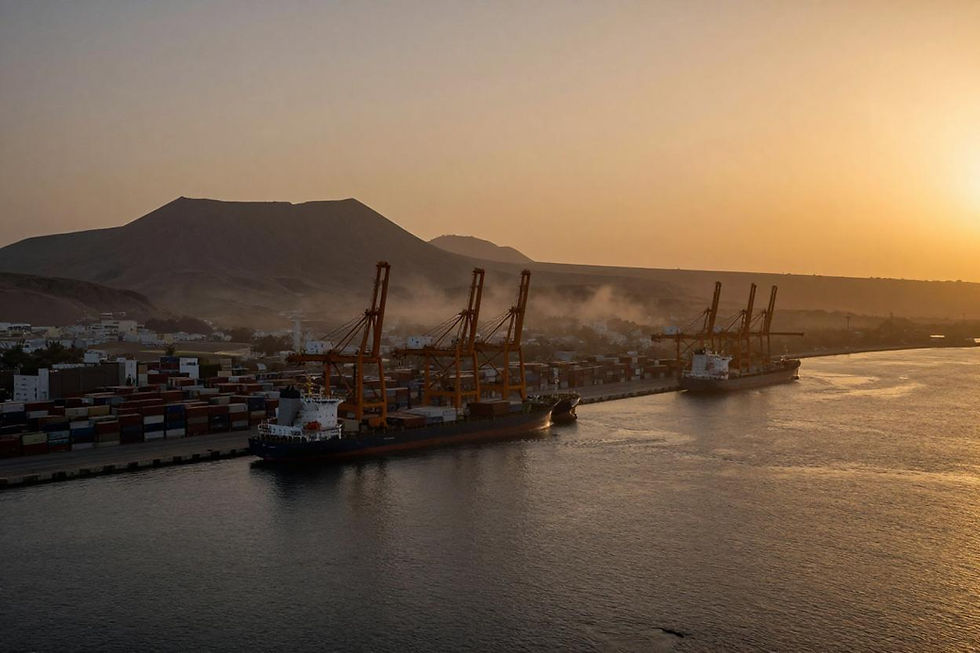
By nightfall on 3 October, the fighters who had marched into Mekelle ten days earlier were marching out; by 5 October, federal control of the city and of Alula Aba Nega airport was confirmed (Africanews, Al Jazeera, 5 October 2026). The flag has been raised — and the war did not stop: overnight airstrikes northwest of the capital killed at least seventeen people, aid sources reported (Reuters, 5 October 2026). The airstrip whose seizure on 23 September grounded Ethiopian Airlines flights to Mekelle, Axum and Shire and tore open the Pretoria ceasefire is back in federal hands; the ceasefire is not.
Mekelle is a temporal bet: Abiy's wager that his army can collapse the Tigrayan front faster than his economy, his seven-enemy coalition and his Red Sea neighbourhood unravel — a bet that expires around mid-October.
TRAJECTORY
Federal forces consolidate control of the city within days and hand urban security to the Tigray Peace Force, the federally aligned splinter of the old rebellion. The TPLF command leaves intact, withdrawing into the escarpments where it was forged as a guerrilla movement, trading terrain for endurance. Abiy declares the operation complete before the end of October. The war does not end; it changes shape. Front lines dissolve into corridor raids and drone exchanges, while the coalition's Amhara and Oromia wings continue their own campaigns on separate clocks. Asmara deepens covert support to the insurgency and hardens the border, stopping short of open intervention this quarter. No political track opens inside the quarter, and the settlement question carries into 2027 on current trajectories.
SECOND-ORDER EFFECTS
Multilateral financiers. A slipping IMF review converts from technical event into market signal for a state whose currency already trades near 180 to the dollar in parallel markets, tightening the fiscal screw that shapes Addis's war termination calculus.
Djibouti logistics chain. Nearly all Ethiopian trade transits a single corridor through contested Afar, carrying coffee, flowers and textiles alongside fuel and fertiliser — a dependency the state prices at over $1.5 billion annually in port fees (The Reporter Ethiopia, 25 July 2026). Sustained fighting along that axis translates into war-risk premia on a route Addis cannot afford to lose.
Asmara's repositioning. The diplomatic rupture converts Ethiopia's Assab doctrine from a negotiating list into a contingency list. Open interstate war this quarter stays unlikely, but the corridor logic pulls Cairo and Riyadh toward Asmara regardless of their public statements — an encirclement dynamic Abiy himself campaigned on in June.
ANALYSIS
The physics of the second Ethiopia Tigray conflict
The defining datum of this campaign is velocity. On 23 September, TPLF-led forces seized three airports in northern Ethiopia in a single coordinated overnight operation; by 3 October, a counteroffensive on three converging axes had reached the regional capital and pushed the Tigrayan forces out of neighbouring Afar entirely, in the assessment of the Critical Threats Project at the American Enterprise Institute (1 October 2026). Twelve days after the rupture, the city and its airport are confirmed in federal hands — and the strikes continue (Reuters, 5 October 2026). The federal camp needs the Tigrayan question settled before it fuses with the wider coalition and before donors and markets reprice the Ethiopian state. Yet the precedent demands humility: in the first round of the Ethiopia Tigray conflict, federal forces entered this city in November 2020 within weeks of that war's outbreak, and the conflict ran two more years, killing an estimated 600,000 people by African Union accounting (France 24, 3 October 2026). A declared victory is almost certain to follow the flag-raising; durable control is a different variable entirely. If Abiy's government holds the city, it will likely delegate security to the Tigray Peace Force — former TDF fighters now aligned with Addis, per analysts quoted by the Associated Press (3 October 2026) — which means the real contest after the fall is intra-Tigrayan (see our Ethiopia 2026 Geopolitical Risk Assessment, September 2026).
The corridor is the campaign
Why Afar came first is not mysterious. The region carries Ethiopia's economic jugular — the corridor to Djibouti — and Tigrayan forces took towns there in the offensive's opening days, forcing tens of thousands to flee, as reported by Reuters (1 October 2026). Behind the battlefield sits the structural driver: Abiy's insistence on sovereign Red Sea access, his refusal to rule out force, and the roughly $1.5 billion Addis Ababa pays annually in Djibouti port and logistics fees (The Reporter Ethiopia, 25 July 2026). The 1 October rupture with Asmara — embassy closure, ten diplomats expelled on 48 hours' notice, full severance of ties (Reuters, 1 October 2026) — arrived alongside reciprocal Egyptian expulsions, with the army chief publicly accusing Eritrea, Sudan and Egypt of backing the rebel coalition; all three deny it (Arab News, 2 October 2026). Continued covert Eritrean support to the insurgents is highly likely; the war crossing openly into the Afar borderlands this quarter remains unlikely — but every federal advance northward tightens that particular test (see our Horn of Africa 2026 Geopolitical Risk Assessment, October 2026).
The clock Abiy cannot extend
The sprint is being financed by an economy mid-reform — the variable the first Ethiopia Tigray conflict never had to test at this scale. The birr has moved from 57.5 to over 160 per dollar since the July 2024 float, with parallel rates approaching 180 in late September, per Addis Insight (29 September 2026); the IMF's $3.4 billion facility has disbursed about $2.65 billion across five reviews, and the July 2026 review already flagged security risks to fiscal and external balances. The state entered the war having just committed a 286 billion birr recapitalisation of the Ethiopian Petroleum Supply Enterprise — roughly 170 billion from World Bank resources — in a year planned for deficit reduction, not war financing (Birr Metrics, 28 September 2026). Communications and banking are again severed — the toolkit of the 2020-22 siege, which produced famine-like conditions then. A second blockade is almost certain to be attempted in some form; a birr breach of 200 to the dollar under war pressure, the tail scenario sketched by Addis Insight (29 September 2026), is a realistic possibility by year-end. The state's arithmetic tolerates a short, victorious war. It does not tolerate the other kind — and the TPLF leadership, which survived the last one, knows it. The overnight strikes northwest of Mekelle, two days after the fall, are the first instalment of the proof.
SIGNALS TO WATCH
The fast-win reading holds unless sustained TPLF attacks resume against the airport or the corridor roads within thirty days; consolidation becomes credible if Ethiopian Airlines restarts flights to Alula Aba Nega and telecoms are restored by early November.
Escalation toward interstate war becomes probable if verified Eritrean units engage federal forces south of the border, or if Ethiopia conducts strikes toward Assab or pushes combat forces across the Afar frontier.
Fiscal strain becomes decisive if the official birr rate breaches 180 and the next IMF review slips beyond its scheduled window.
Political off-ramps return to the table if AU envoy Obasanjo reconvenes simultaneous meetings with both camps before December.
---
Want deeper analysis?
Bespoke advisory and theatre-level assessments are available on request.
Thierry Marquez — Founder & Principal Advisor, CES Intelligence
+33 (0)9 55 16 54 98 →
DISCLAIMER
This CES Daily Signal is provided for informational and strategic planning purposes only. It is not investment advice, financial advice, or legal advice, and it should not be treated as such.
Probability assessments reflect the analyst's calibrated judgment based on available open-source intelligence as of the date of publication and are subject to revision as new information emerges.